If you want to build a business that generates revenue consistently, you must understand how an Automated Sales Funnel works and why it has become the backbone of modern digital growth. The traditional idea of a Sales Funnel still exists, but its structure and intelligence have evolved dramatically. What used to be a simple sequence of landing pages and emails has transformed into a responsive, data-driven ecosystem that adapts to customer behavior in real time.
We are no longer operating in a marketplace where consumers patiently wait for follow-up emails or tolerate generic messaging. Today’s buyers expect personalization, speed, and relevance. They want brands to anticipate their needs and provide solutions instantly. This shift in expectations has forced businesses to rethink how they guide prospects from awareness to purchase. The Automated Sales Funnel is the answer to that challenge because it allows you to design a customer journey that works continuously in the background while you focus on strategy and growth.
In this ultimate beginner guide for 2026, you will learn not only what an Automated Sales Funnel is, but how to build one step by step, how artificial intelligence is reshaping optimization, and how to avoid the common mistakes that prevent most beginners from seeing results.
The Evolution of Digital Sales
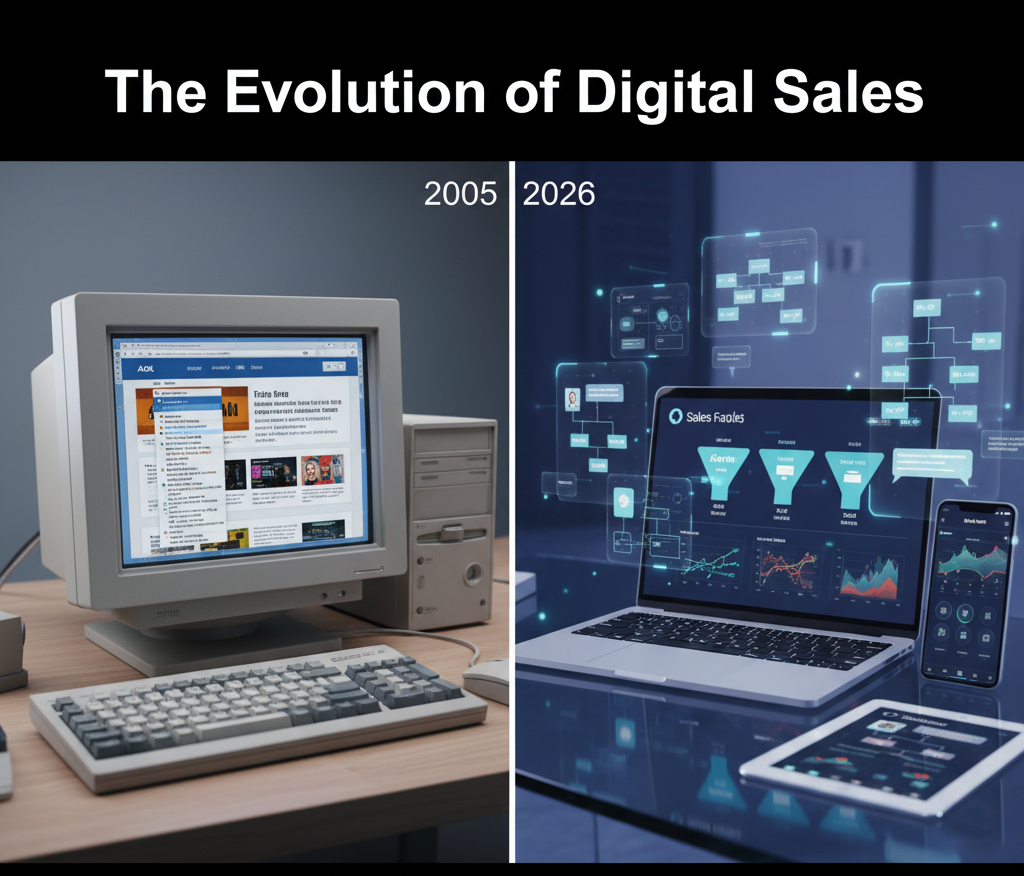
To appreciate the power of automation, you need to understand how digital sales have evolved. A decade ago, a basic Sales Funnel might have included a single landing page offering a free ebook in exchange for an email address, followed by a pre-written email sequence that pitched a product. While that model still functions at a basic level, it no longer provides a competitive advantage.
In 2026, digital ecosystems are interconnected. Customer behavior is tracked across devices. Email platforms integrate seamlessly with website analytics. Artificial intelligence analyzes click patterns, browsing time, and purchase history to predict what a user is most likely to do next. Instead of sending the same message to every subscriber, modern automation allows you to tailor communication based on individual behavior.
An Automated Sales Funnel is essentially a structured path that moves potential customers through specific stages, but the experience feels dynamic rather than rigid. If a user clicks on a particular product category, the system can trigger follow-up messages tailored to that interest. If someone abandons a checkout page, the automation can send a reminder or offer a small incentive to complete the purchase. The result is a fluid experience that feels almost conversational rather than mechanical.
For beginners, this might sound complex, but the technology has become remarkably user-friendly. Drag-and-drop builders, pre-designed templates, and built-in analytics have lowered the barrier to entry. What truly determines success is not technical skill but clarity of strategy and understanding of customer psychology.
The Core Architecture of a Modern Automated Sales Funnel
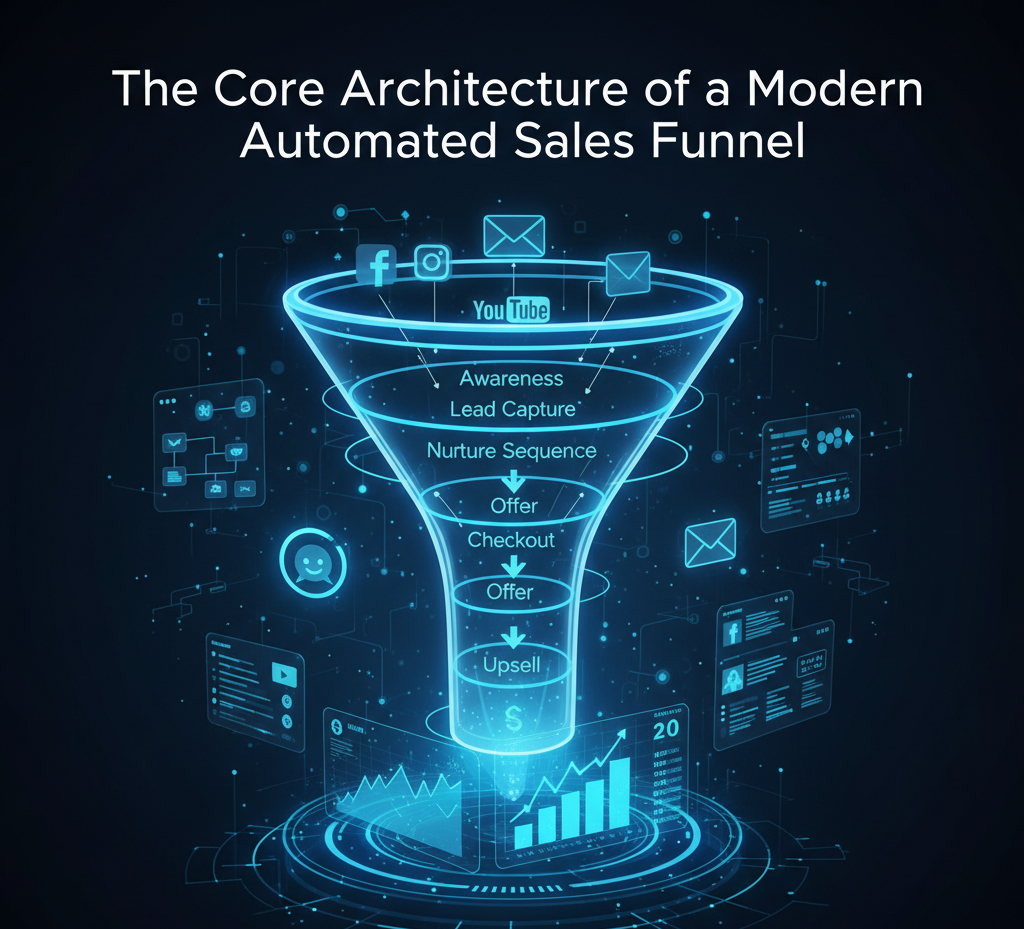
Every successful Automated Sales Funnel in 2026 is built on a structured foundation. While tools and tactics vary, the architecture remains consistent. Understanding these layers gives you control over the entire customer journey.
The first layer is awareness and lead capture. This is where strangers discover your brand. In earlier years, simple PDF downloads were sufficient to attract leads. Today, the most effective lead magnets offer immediate, tangible value. Interactive assessments, mini video courses, AI-powered calculators, or quick diagnostic tools outperform static downloads because they create engagement from the first interaction.
Imagine you run a fitness coaching business. Instead of offering a generic meal plan PDF, you create an interactive calorie calculator that generates personalized results. When users input their data, they receive customized recommendations and are invited to join your email list for further guidance. That single shift dramatically increases perceived value.
The second layer is nurture and relationship building. Once someone enters your funnel, automation takes over. Emails, text messages, or in-app notifications are delivered according to predefined triggers. However, unlike the old one-size-fits-all approach, modern systems branch based on behavior. If a subscriber clicks on content about weight loss but ignores muscle-building articles, future emails emphasize weight loss strategies.
This stage is about trust. People rarely buy immediately. They need reassurance, education, and emotional connection. Your Automated Sales Funnel should tell a story over time, gradually positioning your product as the logical next step.
The third layer is the conversion event. This is where your Sales Funnel presents the primary offer. In 2026, sales pages are often dynamic. Content may adjust based on geographic location, device type, or prior engagement. Testimonials displayed might be tailored to the viewer’s industry. Pricing options can shift depending on the entry point into the funnel.
The final layer is retention and upsell. Many beginners mistakenly believe the funnel ends after the first purchase. In reality, this is where long-term profitability begins. Automated post-purchase sequences can deliver onboarding tutorials, request feedback, encourage referrals, and introduce complementary products. Repeat customers are easier and less expensive to convert than new ones. A complete Automated Sales Funnel accounts for lifetime customer value rather than a single transaction.
How to Build an Automated Sales Funnel from Scratch
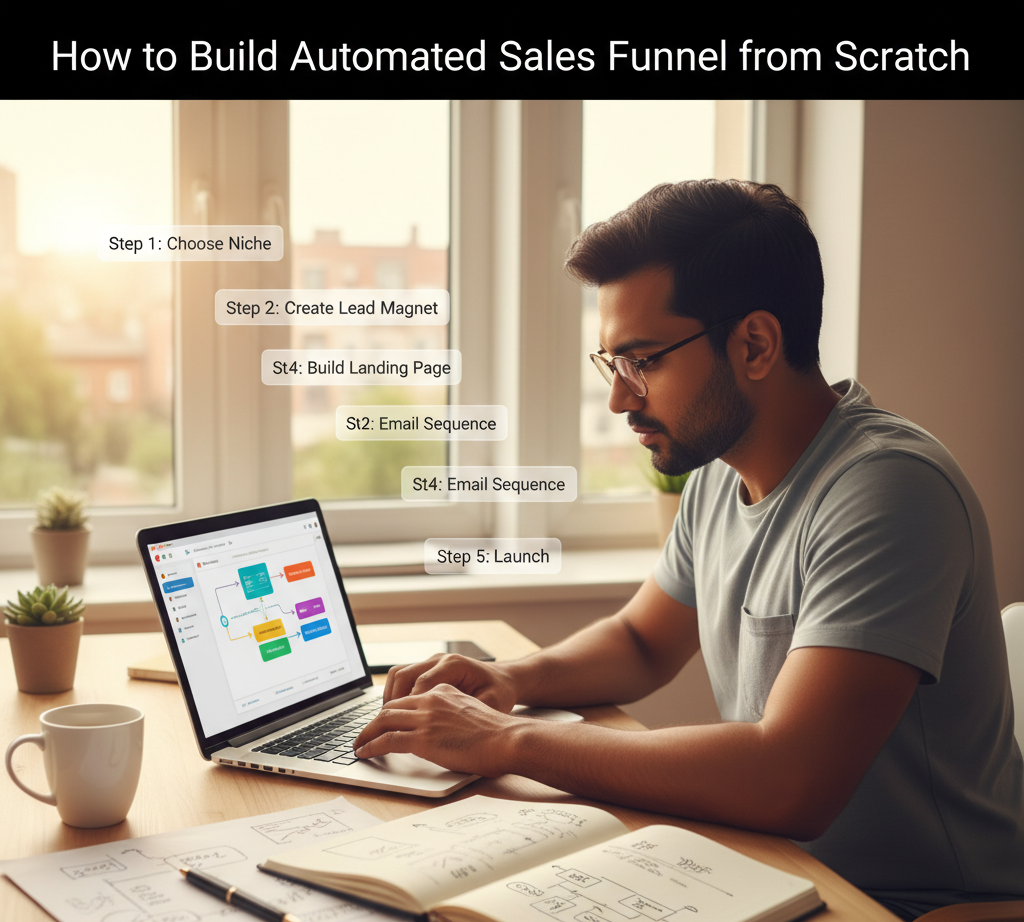
Starting from zero can feel intimidating, but building your first Automated Sales Funnel is more about simplicity than sophistication. The key is to focus on one problem and one solution.
Begin by clearly defining your audience. What specific pain point are they experiencing? Avoid vague statements. Instead of saying you help people grow their business, narrow it down to helping freelance designers find their first five clients.
Next, design a simple entry offer that addresses that pain point quickly. This could be a checklist, a mini training video, or a short guide. Create a clean landing page that explains the value of this resource in clear language and invites visitors to provide their email address.
After capturing the lead, develop a short email sequence that delivers additional value while introducing your paid offer. In 2026, a five to seven-day nurture sequence is often enough for entry-level products. Each message should build logically on the previous one, reinforcing your expertise and guiding the reader toward a decision.
You do not need a complicated tech stack at the beginning. Many platforms now integrate page building, email marketing, and payment processing into one interface. Focus on clarity of messaging rather than obsessing over design details. A well-written Sales Funnel with simple visuals will outperform a visually impressive funnel with weak copy.
The Role of Artificial Intelligence in Funnel Optimization
One of the most significant advancements in 2026 is the integration of artificial intelligence into funnel optimization. In the past, split testing required manual setup and long waiting periods to determine which version of a headline or image performed better. Today, AI can automatically generate variations and distribute traffic in real time, learning from user interactions.
This means your Automated Sales Funnel improves over time without constant manual intervention. If a specific subject line generates higher open rates, the system prioritizes it. If a pricing layout increases conversions, more visitors see that version.
Predictive analytics also plays a critical role. Modern systems analyze behavior patterns to identify high-intent leads. For example, if a subscriber repeatedly visits your pricing page and downloads multiple resources, the system may flag them as a strong candidate for a personalized outreach email or a limited-time offer.
For beginners, this level of sophistication may seem advanced, but many platforms have simplified these features into user-friendly dashboards. The most important step is to regularly review your analytics and understand what the data is telling you. Automation does not eliminate strategy. It enhances it.
Common Mistakes Beginners Make
While building an Automated Sales Funnel is more accessible than ever, beginners often fall into predictable traps. One common mistake is overcomplicating the structure. Trying to build a multi-layered system with dozens of triggers before validating a basic offer leads to confusion and burnout.
Another mistake is neglecting the customer experience. Automation should feel seamless, not robotic. If your messages are overly generic or excessively frequent, subscribers may disengage. Balance efficiency with empathy.
Many new entrepreneurs also underestimate the importance of testing and iteration. Your first version of a Sales Funnel is unlikely to be perfect. Treat it as a prototype. Gather feedback, analyze performance metrics, and refine your messaging.
The Right Tools for Your Strategy And Strategies for Sustainable Growth
In 2026, there is no shortage of platforms promising to build your Automated Sales Funnel in minutes. The key is integration. Choose tools that communicate effectively with each other. Your email system should sync with your landing pages and payment processor. Your analytics should provide clear insight into user behavior.
Avoid chasing every new software trend. Instead, select a platform that supports scalability. As your business grows, you may want advanced segmentation, AI-driven testing, or membership site capabilities. Ensure your chosen system can expand with you.
Remember that software is only a vehicle. The engine of your Sales Funnel is your message and understanding of your audience. No platform can compensate for unclear positioning or weak value propositions.
Beyond the technical setup, successful entrepreneurs in 2026 focus on long-term growth strategies. They prioritize building an email list over chasing viral traffic spikes. They nurture relationships consistently rather than pushing constant promotions.
An effective Automated Sales Funnel also incorporates content marketing. Blog posts, social media updates, and video content feed the top of your funnel, bringing new prospects into your ecosystem. Over time, your funnel becomes a central hub connecting all marketing activities.
Community building is another powerful strategy. Encouraging subscribers to join private groups or participate in live sessions increases engagement and trust. Automation handles the logistics, but a genuine connection drives loyalty.
Conclusion: Building an Automated Sales Funnel in 2026
Building an Automated Sales Funnel in 2026 is not about mastering complex technology. It is about understanding people. When you design a journey that anticipates needs, delivers value, and guides prospects with clarity, automation becomes a powerful ally.
Start small. Focus on solving one specific problem. Create a simple lead magnet and nurture sequence. Launch your funnel, observe how real users interact with it, and refine accordingly. As you gain confidence, layer in more advanced features such as AI optimization and dynamic personalization.
The beauty of a well-designed Sales Funnel is that it works continuously. While you sleep, travel, or focus on product development, your system attracts, educates, and converts prospects. Over time, this compounding effect transforms a modest online presence into a scalable business.
In a world that demands efficiency and personalization, mastering the Automated Sales Funnel is no longer optional for ambitious entrepreneurs. It is the foundation of sustainable digital growth. By combining modern technology with strategic thinking and empathy for your audience, you can build a system that not only drives revenue but also creates meaningful value for the people you serve.