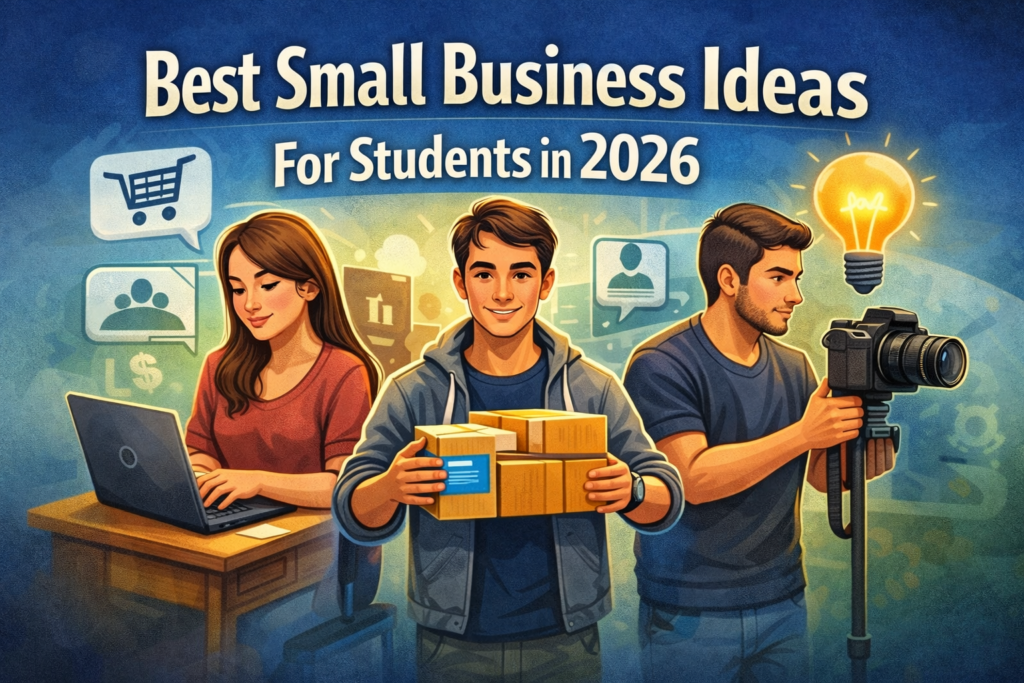
Are you a student, and are you considering stepping into the exciting path of business? Starting a business as a student can be overwhelming, but business is a very rewarding venture, and the decision to start today will be your best bet because even if you don’t make it big, you will have learnt added some new and real skills to your survival in the future. Small business ideas for students are far beyond income opportunities. They function as your first training ground where you have nothing to lose but lessons to learn, practical laboratories for skill acquisition, resilience development, and strategic thinking.
As a student in 2026, you are positioned in a uniquely advantageous economic climate. The internet and information economy have significantly reduced entry barriers, allowing individuals with limited capital to launch viable ventures. You do not need extensive funding, formal corporate experience, or complex infrastructure to begin. What you need is strategic thinking, disciplined execution, and the willingness to learn through practical experience.
Starting a business while studying is not merely about earning supplementary income. It is a structured way to develop applied skills such as negotiation, sales psychology, operational management, customer acquisition, and financial discipline. These competencies compound over time and often become more valuable than theoretical classroom knowledge, and if done right, you can break out as the next Mark Zuckerberg.
Choosing a good small business idea for students starts with
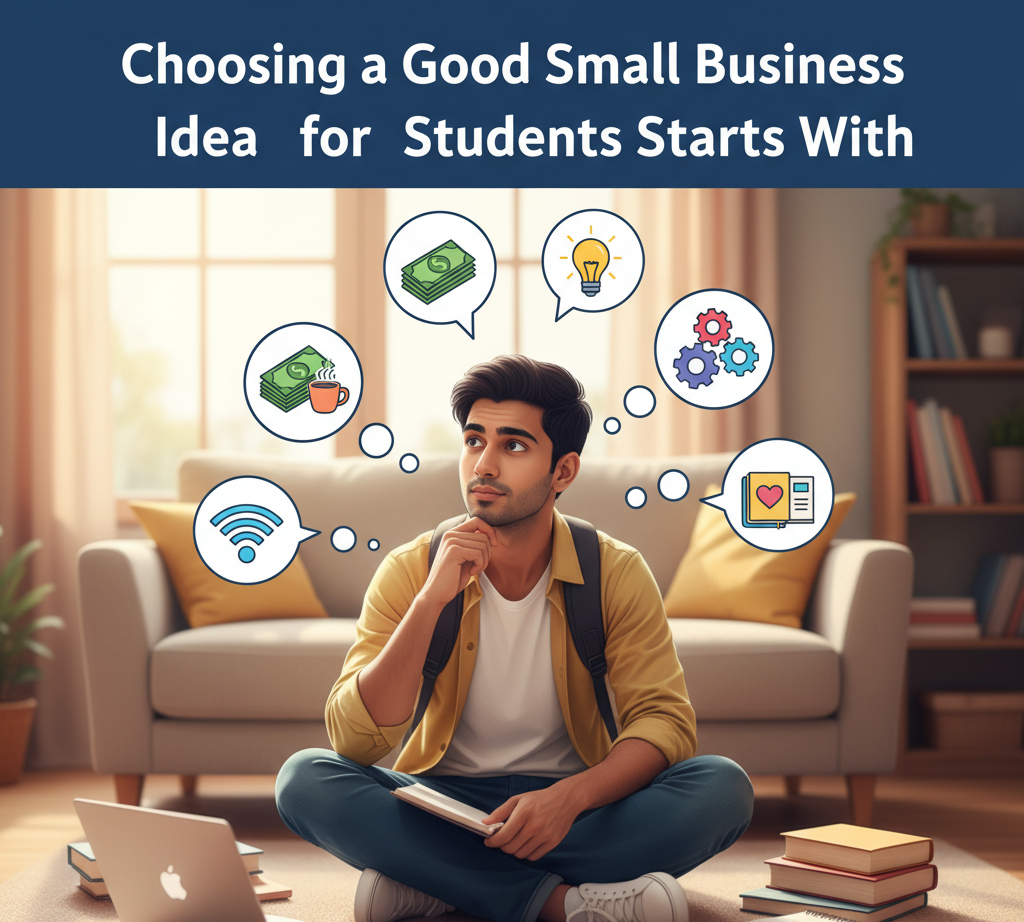
Choosing a good small business idea starts with understanding yourself. A business that works perfectly for one person might not suit someone else, so it’s important to consider what aligns with your skills, interests, and capabilities. Think about what you enjoy doing, what you’re good at, and what you feel confident managing alongside your other commitments.
You should also reflect on your goals for starting the business. Are you looking for extra income to support daily expenses, or do you want to build something that could eventually become your primary source of revenue? Asking yourself these kinds of questions helps you identify a small business idea that not only matches your strengths but also supports your personal and financial objectives. By choosing a venture that fits your skills and goals, you set yourself up for a higher chance of success and sustainability.
#1. Digital Services Business
A digital services business operates by offering specialized online skills to individuals, startups, or small businesses that lack in-house expertise. This model works because most companies today depend heavily on digital visibility, content production, and online engagement, but do not always have the capacity to manage these functions internally.
Students can begin by identifying a skill they already possess or can quickly develop. This may include reselling digital marketing tool social media management, graphic design, content writing, video editing, or basic website creation. The business model is straightforward: clients pay either a monthly retainer fee or a per-project fee in exchange for clearly defined deliverables.
To get started, students should build a small portfolio. This can be done by redesigning a mock brand, managing a friend’s small business account for free initially, or creating sample content. Once proof of capability exists, outreach becomes critical. Students can approach local campus-area businesses, startups, and entrepreneurs through email, direct messaging, or in-person networking.
As client volume increases, operations can be structured more efficiently. Certain tasks can be delegated to other students, gradually transitioning from freelancer to agency model. The scalability lies in systemizing service delivery while maintaining quality control.
#2. Academic Support Services
Academic support businesses operate by monetizing subject-matter expertise. Students who perform well in specific subjects possess knowledge that other students are willing to pay for, particularly during exam seasons.
The most direct approach is one-on-one tutoring. This involves scheduling structured sessions focused on helping clients understand coursework, solve practice problems, or prepare for examinations. Payment can be hourly or package-based.
However, the model becomes more scalable when group sessions or workshops are introduced. Instead of teaching one student at a time, you can teach ten simultaneously. This increases income efficiency without proportionally increasing time commitment.
A further level of scalability involves creating digital study materials such as revision guides, recorded explanation videos, or structured practice question banks. These materials are developed once and sold repeatedly. Students can distribute them through social platforms, messaging groups, or online marketplaces.
The operational key here is credibility. Students should demonstrate academic competence through grades, testimonials, or sample materials before aggressively marketing services.
#3. E-Commerce and Print-on-Demand
E-commerce allows students to sell products without owning a physical storefront. The print-on-demand model, in particular, eliminates the need to purchase inventory upfront. Products are only manufactured after a customer places an order.
The process works as follows. A student designs graphics for items such as hoodies, T-shirts, notebooks, or tote bags. These designs are uploaded to a print-on-demand supplier platform. When a customer places an order through the student’s online store, the supplier prints the item and ships it directly to the buyer. The student earns the profit margin between production cost and retail price.
To execute effectively, students must focus on niche targeting. For example, campus-specific humor, department-related themes, or trending student culture references tend to perform well because they resonate strongly with a defined audience.
Marketing becomes the primary driver of success. Students can leverage campus communities, social media platforms, and peer networks to generate demand. Branding consistency, rather than random product uploads, determines long-term viability.
#4. Product Reselling
Product reselling is built on identifying undervalued items and selling them at a higher price within a different market segment. The profit is derived from the margin between sourcing cost and selling price.
Students can source products through wholesale suppliers, discount stores, thrift shops, or bulk purchasing platforms. Popular categories often include tech accessories, fashion items, and seasonal student necessities.
The key to success lies in market observation. For example, during examination periods, students frequently seek convenience items such as snack packs or stationery bundles. By packaging these items attractively and pricing them appropriately, a student can generate short-term but consistent demand.
Execution requires basic inventory management and simple marketing tactics. Social proof, limited-time offers, and peer referrals often drive early traction. As operations grow, students can formalize the structure through online storefronts or campus delivery systems.
#5. Content Creation and Personal Branding
Content creation operates on audience attention. Students who consistently produce valuable, entertaining, or educational content build an engaged following. Over time, that audience can be monetized.
The process begins with niche selection. Instead of producing broad content, students should focus on a specific area such as academic tips, productivity systems, fitness routines, technology reviews, or student lifestyle documentation.
Consistency is critical. Publishing regularly builds algorithmic visibility and audience trust. Once a measurable audience exists, monetization channels expand. These may include sponsorship partnerships, affiliate marketing, digital product sales, or membership communities.
The barrier to entry is low, but patience is required. Revenue rarely appears immediately. However, the long-term scalability of audience-based businesses is significant once authority and trust are established.
#6. Tech-Based Solutions
Students with technical skills can build solutions to recurring campus problems. This business model works by identifying inefficiencies and creating digital tools that simplify processes.
For example, students may struggle to find accommodation listings, exchange textbooks efficiently, or locate study partners. A simple web platform or application addressing one of these issues can gain traction quickly.
The process typically begins with problem validation. Students should interview peers and confirm consistent demand before building a solution. A minimum viable product can be developed using coding knowledge or no-code platforms.
Monetization may occur through subscription fees, listing charges, or advertising placements. While technical ventures may require more development time, their scalability potential is considerably higher than service-based models.
#7. Event-Based Services
Campus environments naturally generate frequent events. Birthdays, departmental gatherings, graduation ceremonies, and social celebrations create consistent demand for photography, videography, decoration, and coordination services.
Students who own basic equipment can begin by offering discounted rates to build a portfolio. High-quality visuals and positive testimonials significantly influence booking rates.
Event decoration or coordination services operate by managing logistics and design elements for clients who prefer outsourcing organizational stress. Clear pricing packages and transparent communication are essential.
Reputation spreads quickly in close campus communities. Reliability and professionalism often matter more than aggressive marketing.
#8. Skill Coaching and Micro-Courses
Skill coaching monetizes personal expertise. Students who possess practical abilities in fitness training, coding, design, public speaking, or other competencies can package their knowledge into structured training programs.
This can begin with small workshops or personalized sessions. Over time, recorded modules can be created and sold digitally, reducing direct time involvement.
The structure involves curriculum design, clear learning outcomes, and consistent delivery. Testimonials from early participants significantly improve credibility and enrollment rates.
Education outside traditional classrooms continues expanding, creating favorable conditions for peer-led instruction models.
#9. Selling Resell Rights Products

One of the most practical small businesses for students in 2026 is selling resell rights products. This model works by allowing you to legally sell pre-created digital products and keep the profits. Instead of developing your own eBook, course, or training program, you purchase a license that permits you to resell an existing product.
The biggest advantage for students is efficiency. The product is already created, designed, and formatted, which means you do not spend weeks building content. This significantly reduces startup time and prevents the business from interfering with academic responsibilities. Because the products are digital, there are no inventory, storage, or shipping costs. After the initial license purchase, most of the revenue generated becomes profit aside from minor transaction or marketing expenses.
Getting started is relatively straightforward. First, choose a niche with consistent demand, such as digital marketing, AI productivity tools, personal finance, fitness programs, or online side hustles. Next, acquire high-quality resell rights products from reputable sources. Then create a simple sales page or use social media platforms to promote the product by sharing helpful, value-driven content related to the topic. Once sales begin, you can scale gradually by expanding your product catalog or improving your marketing system.
This business model is especially suitable for students because it requires little startup capital, minimal ongoing management, and flexible time commitment. With automation tools handling payment and product delivery, you can focus on studies while maintaining a steady income stream. For students looking for a low-risk, scalable option, selling resell rights products stands out as one of the smartest small business ideas to explore in 2026.
ALSO READ: Passive Income with Resell Rights: A Beginner’s Guide in 2026
#10. Vending Machines
Vending machines are a practical passive income option for students in 2026 because they operate continuously with limited daily involvement once installed. After setup, they function as automated retail units that generate revenue 24/7, making them suitable for students who need income without sacrificing study time.
The primary factor that determines success is location. Placing machines in high-traffic areas such as schools, office buildings, gyms, hospitals, or shopping centers increases the likelihood of consistent sales. Product selection is equally important. Stocking items that match the needs of the specific environment, such as snacks, drinks, or health-focused options, improves performance and repeat purchases.
Although vending machines are relatively hands-off, they still require periodic restocking and maintenance to ensure smooth operation. Starting involves researching strong locations, choosing the right machine type, negotiating placement agreements, and monitoring sales performance to optimize inventory and pricing.
While vending machines require more upfront capital than some digital businesses, they provide a predictable cash flow once strategically placed. For students who can secure strong locations and manage inventory effectively, vending machines represent a stable, semi-passive income model that can grow by simply adding additional units over time.
Strategic Considerations Before Launch

Before committing fully to any business idea, students should assess feasibility. The idea must solve a real problem, remain manageable during academic commitments, and demonstrate repeat demand.
Financial tracking should begin from day one. Even small ventures require expense monitoring and reinvestment strategies. Profits should ideally be reinvested into improving quality, marketing reach, or operational efficiency.
Time management is non-negotiable. Academic performance should not be compromised. Structured work hours and realistic goals prevent burnout.
Collaboration also plays a significant role. Universities are concentrated talent ecosystems. Partnerships between designers, marketers, developers, and business-oriented students often produce stronger ventures than isolated efforts.
Conclusion: Small Business Ideas for Students
Small business ideas for students in 2026 represent more than income opportunities. They function as practical laboratories for skill acquisition, resilience development, and strategic thinking.
RELATED POST: Best Small Business Ideas to Start in 2025
The most effective approach is to select one idea aligned with your existing strengths, start at a manageable scale, validate demand, and iterate based on real-world feedback. Sustainable progress emerges from disciplined execution rather than impulsive enthusiasm. When approached strategically, student entrepreneurship becomes a long-term asset that extends far beyond graduation. related. If you found this post useful, we post articles like this daily on our blog. Visit our Resell Rights Store to get the best resell rights deal.