
It is common knowledge in investing that traditional assets such as bonds, stocks, and high-yield savings accounts are widely regarded as good assets. These financial instruments have been trusted for decades because they provide relatively stable ways to grow wealth or generate income over time. In fact, in our recent post, we discussed how these assets continue to play an important role in building a solid financial foundation for both new and experienced investors. Today, as we look at good assets to buy to make money in 2026, we will be taking a more dynamic look.
However, investing today requires looking beyond traditional categories. The economy is evolving rapidly, and new technologies, changing consumer behavior, and emerging markets are constantly reshaping where opportunities exist. As a result, many modern investors are approaching asset selection from a more dynamic perspective.
Instead of focusing solely on asset types such as stocks or bonds, they also consider the industries behind those assets. Different industries grow at different rates, respond differently to economic changes, and offer unique opportunities shaped by global trends. By understanding which industries are expanding and which sectors are driving innovation, investors can position themselves to benefit from long-term growth.
Think of it this way. Owning stocks is one thing, but owning stocks in rapidly expanding industries such as artificial intelligence, renewable energy, or digital infrastructure can offer far more upside than randomly investing in the market. The same logic applies to real estate, private equity, or even digital assets. The sector in which the asset operates can often determine its long-term potential.
This is why many investors are taking a more strategic view of their portfolios. Rather than simply asking which assets to invest in, they are asking deeper questions, such as which industries are shaping the global economy and which assets within those industries offer the best opportunities for growth and income.
In this article, we will take a closer look at Good Assets to buy to Make Money from a broader perspective. Instead of focusing only on asset categories, we will explore some of the most promising industries in today’s economy and identify the top assets within those industries that investors are paying attention to. By examining both the industries and the specific assets connected to them, you will gain a clearer understanding of where some of the most exciting investment opportunities may lie in the years ahead.
Understanding Dynamic Good Assets to buy to make money in 2026.

The economy currently looks very different from what it was a few years ago. After the inflation spikes of the early 2020s and the intense excitement surrounding artificial intelligence breakthroughs in 2024, markets have entered a different and more practical phase. Investors are no longer chasing hype or traditional investment strategies. Instead, they are focusing on industries that form the backbone of a modern, technology-driven world.
Today, the most reliable assets to buy for profit are tied to infrastructure, digital transformation, healthcare innovation, and energy systems that power the global economy. The world is becoming more automated, more electrified, and more connected. Companies and assets that support this transformation are attracting serious capital.
If you are looking for good assets that can help grow wealth in the coming years, it is important to understand where long-term demand is building. In this guide, we will explore the industries shaping the investment landscape and highlight the assets investors are increasingly turning to in 2026.
Artificial Intelligence and Computing Infrastructure
Artificial intelligence has evolved far beyond experimental technology. In 2026, it is embedded in nearly every industry, from finance and logistics to healthcare and manufacturing. Businesses now rely on AI systems to automate operations, analyze data, and make strategic decisions.
The next phase of AI focuses on agentic systems, which are intelligent programs capable of performing complex tasks rather than simply responding to questions. These systems require enormous computing power and massive digital infrastructure.
For investors seeking high-quality assets to buy for returns, the infrastructure supporting AI may be more valuable than the applications themselves.
Key assets in the AI infrastructure sector include:
Powered land and hyperscale data centers
Data centers are the factories of the digital world. They house the computing systems that train and operate artificial intelligence models. In 2026, land with access to large power supplies has become extremely valuable, as AI systems require substantial electricity capacity.
Edge computing hardware
AI is increasingly moving from centralized data centers to devices such as smartphones, vehicles, and industrial machines. Edge computing chips process data locally, reducing latency and improving efficiency.
SaaS platforms with agentic workflows
Traditional software sold licenses to individual users. New AI-powered software automates tasks, enabling companies to charge based on outcomes rather than seats.
Quantum-safe cybersecurity solutions
Cyber threats are evolving alongside artificial intelligence. Companies developing next-generation encryption systems designed to withstand future quantum computing attacks are attracting investor attention.
AI training data licensing platforms
Artificial intelligence requires enormous amounts of high-quality data. Companies that own unique datasets such as medical records, financial archives, or specialized industry information are becoming valuable assets in the AI economy.
The Energy and Utilities Renaissance
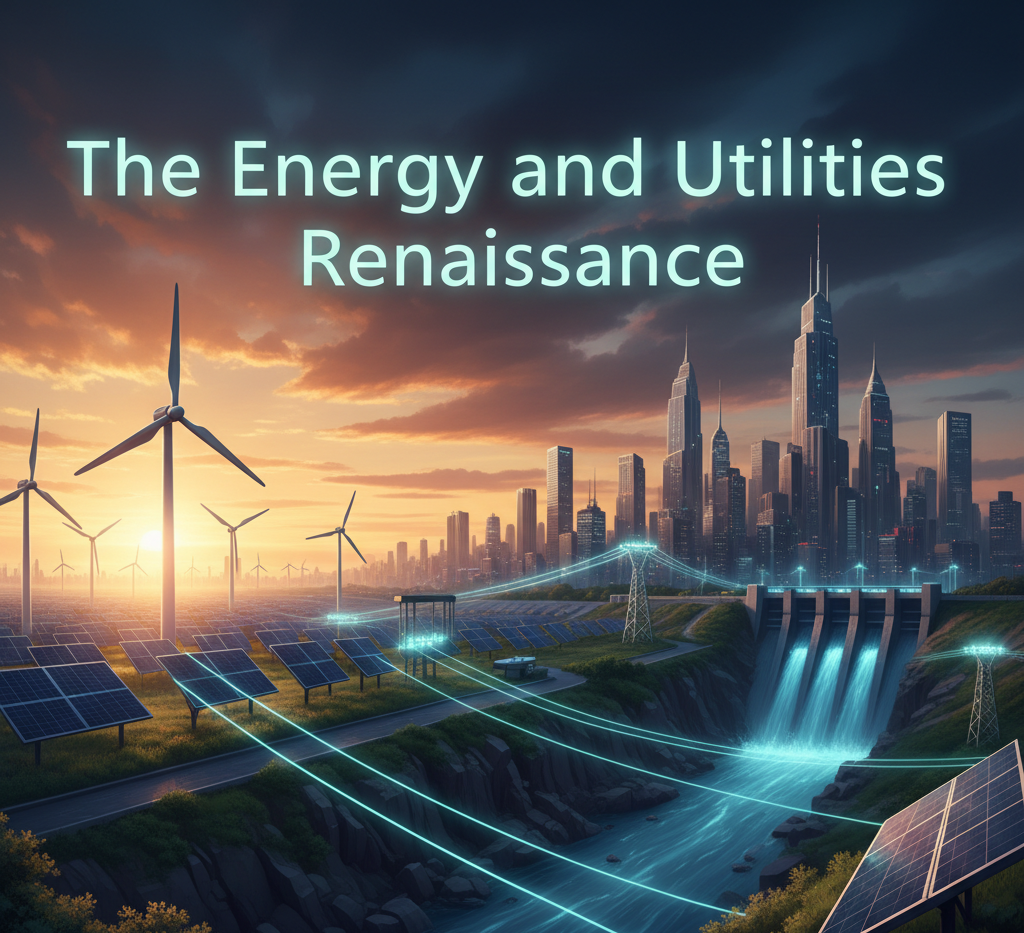
The growth of artificial intelligence, electric vehicles, and digital infrastructure has dramatically increased global electricity demand. By 2026, data centers alone will consume a significant share of global power generation.
This demand has created a renewed focus on energy infrastructure, leading to a renaissance in the utilities and power generation sectors. Investors are increasingly seeking high-quality assets in energy systems capable of meeting future electricity demand.
Some of the most promising energy assets include:
Nuclear energy and uranium resources
Small modular reactors are transforming the nuclear industry by offering safer and more scalable nuclear power solutions. Uranium producers and nuclear technology companies are benefiting from renewed global interest in nuclear energy.
Power grid modernization infrastructure
Many national electricity grids were built decades ago and require upgrades to support renewable energy, electric vehicles, and digital infrastructure. Companies building transformers, high-voltage cables, and smart grid technologies are critical to this transition.
Copper and critical mineral royalties
Every electric vehicle, renewable energy system, and AI data center requires large amounts of copper and other minerals. Royalty companies that earn revenue from mining operations offer exposure to this demand with lower operational risk.
Battery energy storage systems
As renewable energy becomes more common, storing excess electricity becomes increasingly important. Large-scale battery installations help stabilize power grids and provide reliable energy during peak demand.
Advanced geothermal energy projects
Breakthroughs in drilling technology have allowed geothermal power systems to tap heat deep beneath the earth’s surface. This provides a reliable, renewable energy source that can operate continuously.
Healthcare and the Longevity Economy
Healthcare is undergoing one of the most profound transformations of the modern era. Instead of treating disease alone, the industry is increasingly focused on prevention, longevity, and metabolic health.
Advances in biotechnology, artificial intelligence, and medical diagnostics are creating entirely new asset classes for investors. As populations age worldwide, demand for healthcare innovation continues to grow.
Several healthcare assets stand out in 2026:
The GLP-1 metabolic health ecosystem
GLP-1 medications, originally designed to treat diabetes, are now widely used for metabolic health and weight management. Companies supporting the broader ecosystem surrounding these treatments are benefiting from growing demand.
AI-driven drug discovery platforms
Artificial intelligence is dramatically accelerating pharmaceutical research by enabling faster identification of promising drug candidates than traditional laboratory methods.
Senior living and memory care real estate
As global populations age, specialized housing and healthcare facilities for elderly individuals are experiencing strong demand and rising occupancy rates.
Liquid biopsy and early cancer detection technology
Medical tests that detect diseases such as cancer from simple blood samples are becoming an important part of preventive healthcare.
Bio-manufacturing and pharmaceutical production infrastructure
Companies that manufacture complex biological medicines are becoming essential partners to pharmaceutical firms developing advanced therapies.
Industrial Real Estate and Logistics Infrastructure
Real estate has long been considered one of the most dependable asset classes. However, the type of real estate attracting investment has shifted significantly.
Office buildings have struggled in many regions due to remote work trends, while industrial and logistics properties have become increasingly valuable. These facilities support e-commerce, global trade, and supply chain networks.
If you are searching for good assets to buy to make money in real estate, industrial infrastructure is becoming a dominant theme.
Important real estate assets include:
Tokenized industrial real estate
New digital platforms allow investors to purchase fractional ownership of properties such as warehouses or logistics facilities, making real estate more accessible to smaller investors.
Cold storage facilities
Temperature-controlled warehouses are essential for storing pharmaceuticals, vaccines, and perishable food products. Demand has surged due to e-commerce grocery delivery and biotech innovation.
Near-shoring logistics hubs
As companies diversify supply chains away from single-country manufacturing, logistics hubs in regions such as Southeast Asia and Latin America are expanding rapidly.
Self-storage facilities
Self-storage properties have remained resilient across multiple economic cycles, driven by steady demand and relatively low operating costs.
Digital infrastructure real estate
Cell towers, fiber networks, and telecommunications infrastructure are essential for supporting mobile connectivity, cloud computing, and emerging communication technologies.
FinTech and the Digital Finance Revolution
Finance itself is being transformed by technology. Traditional banks are facing competition from digital platforms that offer faster, more accessible financial services.
These innovations are creating new investment opportunities for those seeking high-quality assets tied to the future of finance.
Key fintech investment opportunities include:
Private credit funds
As banks reduce lending to certain business segments, private funds are stepping in to fill the gap. Investors often receive attractive yields from these loans.
Tokenized real-world assets
Blockchain technology enables the digital trading of traditional financial instruments, such as government bonds and corporate debt, with greater transparency and liquidity.
Cryptocurrency staking systems
Some blockchain networks allow investors to earn rewards by staking their digital assets to support network security.
Embedded insurance platforms
Insurance is increasingly integrated directly into consumer purchases, allowing customers to buy coverage instantly at checkout.
Cross-border digital payment rails
New financial networks are making international money transfers faster and cheaper, disrupting traditional banking systems.
How Investors Evaluate Good Assets to buy to make money in 2026

While each industry offers unique investment opportunities, experienced investors rarely rely on excitement or trends alone when evaluating potential assets. Instead, they rely on a set of consistent principles to identify investments with the strongest long-term potential. These principles help investors distinguish assets that may deliver sustainable returns from those that may only generate short-term hype.
Understanding these guiding factors is essential for anyone looking to build a strong investment portfolio. The most successful investors evaluate opportunities through several core considerations to assess value, risk, and future growth potential.
Long-term demand remains the foundation of strong investments
One of the most important principles investors use when evaluating assets is long-term demand. Assets tied to fundamental human or economic needs tend to retain their value over time because demand for them does not decline easily.
Industries such as energy, healthcare, food production, transportation, and digital infrastructure exist at the core of modern society. Regardless of economic cycles or technological shifts, people will always require electricity, medical services, internet connectivity, and essential goods. Because these needs remain constant, businesses operating in these sectors often benefit from stable and predictable demand.
Investors often examine demographic trends, technological adoption patterns, and global economic development when assessing long-term demand. For example, the increasing reliance on cloud computing and artificial intelligence has significantly increased demand for data centers and digital infrastructure. Similarly, aging populations in many countries are driving consistent demand for healthcare services and pharmaceutical innovation.
By focusing on assets connected to long-term societal needs, investors increase the likelihood that their investments will remain relevant and profitable for many years.
Scalable systems and technologies create stronger growth potential
Another critical factor that investors evaluate is scalability. Scalability refers to a business’s ability to grow its operations and revenue without experiencing a proportional increase in costs.
Businesses that rely heavily on physical resources or manual labor often face limits to how quickly they can expand. In contrast, companies built around scalable systems can grow far more efficiently. Technology companies provide some of the most visible examples of this concept.
A software platform, for instance, can serve thousands or even millions of users without requiring the same level of infrastructure expansion that a manufacturing company might need. Once the core product is developed, additional customers can often be served at relatively low cost. This creates the potential for significantly higher profit margins as the business grows.
Investors frequently look for companies that have developed systems, platforms, or technologies capable of scaling rapidly. Digital services, cloud platforms, artificial intelligence tools, and online marketplaces are often attractive because they can expand globally without requiring extensive physical infrastructure.
Scalability does not apply only to technology businesses. It can also exist in industries where companies develop efficient operational systems, strong distribution networks, or powerful brand ecosystems that allow them to expand into new markets with relative ease.
Diversification reduces exposure to unexpected risks
Even the most promising investment sector can experience unexpected disruptions. Economic downturns, technological shifts, regulatory changes, or geopolitical events can affect industries in unpredictable ways.
For this reason, experienced investors rarely concentrate all their resources in a single industry or asset class. Instead, they rely on diversification as a core risk management strategy. Diversification involves spreading investments across multiple industries, geographic regions, and asset categories to reduce the impact of negative events in any one area.
For example, an investor might allocate funds across technology companies, healthcare businesses, renewable energy firms, and real estate assets. If one sector experiences a temporary decline, the performance of other sectors can help balance the overall portfolio.
Diversification also allows investors to benefit from growth in multiple areas of the economy simultaneously. While one industry may mature or slow, another may expand rapidly due to new technological breakthroughs or changing consumer behavior.
Successful investors view diversification not simply as a safety measure but as a strategic approach that allows them to capture opportunities across different segments of the global economy.
Financial strength and cash flow stability play a crucial role
Another important consideration when evaluating assets is the financial health of the business or investment. Strong financial fundamentals often indicate that a company has the resilience needed to survive market fluctuations and continue growing over time.
Investors frequently examine metrics such as revenue growth, profit margins, cash flow stability, and debt levels. Businesses that generate consistent cash flow are generally better positioned to reinvest in innovation, expand operations, and return value to shareholders.
Companies with excessive debt or unstable earnings may struggle during economic downturns, making them riskier investments. In contrast, financially stable businesses often have the flexibility to navigate challenging market conditions while continuing to pursue growth opportunities.
By analyzing financial performance and balance sheet strength, investors can assess whether an asset has the structural stability to sustain long-term value.
Competitive advantages help protect long-term value
Finally, experienced investors often evaluate whether a business possesses a durable competitive advantage. Competitive advantages, sometimes referred to as economic moats, help companies defend their market positions against competitors.
These advantages can take many forms. Some companies benefit from strong brand recognition that builds customer loyalty over time. Others hold patents or proprietary technologies that prevent competitors from easily replicating their products. In some industries, large distribution networks or exclusive partnerships create barriers that new entrants find difficult to overcome.
When a company maintains a strong competitive position, it is more likely to retain customers, maintain pricing power, and sustain profitability even as new competitors enter the market.
Investors often seek businesses with durable advantages because these qualities help preserve value over the long term. Assets backed by strong competitive positions tend to demonstrate greater resilience and consistent performance.
Understanding the bigger picture
While each industry offers different opportunities for growth and profit, these guiding principles help investors evaluate assets more effectively. Long-term demand ensures that the underlying market remains stable. Scalability allows businesses to expand efficiently. Diversification protects portfolios from unexpected shocks. Financial strength provides resilience during difficult periods, while competitive advantages help sustain market leadership.
By applying these principles consistently, investors can move beyond speculation and make more informed decisions about where to allocate their capital. Over time, this disciplined approach often leads to stronger portfolios and more reliable long-term returns.
Conclusion: Good Assets to Buy to Make Money
The search for good assets to buy to make money in 2026 is less about chasing the next big trend and more about understanding the forces reshaping the global economy.
Artificial intelligence infrastructure, energy systems, healthcare innovation, logistics, real estate, and financial technology are all creating powerful investment opportunities. These sectors represent the foundation of a more automated, connected, and efficient world.
For investors who take the time to understand these changes, the opportunities can be substantial. The most successful portfolios will likely include a mix of assets tied to technology, energy, healthcare, real estate, and finance.
By focusing on strong assets aligned with long-term global trends, you position yourself to benefit from the economic transformations shaping the future. While no investment is completely risk-free, assets that support essential infrastructure and human progress have historically proven to be some of the most reliable paths to building wealth over time.