The first time I truly understood the idea of residual income and passive income as money or cash flow generated from investments, which prompted me to research some investments that pay a monthly income, was when I first read Rich Dad Poor Dad by Robert Kiyosaki. That book completely shifted how I viewed money. It wasn’t just another motivation story about working harder or earning more. It was a wake-up call about how the rich play the game of money differently from the poor and middle class.
Kiyosaki explained in his book a simple yet powerful idea on how wealthy people don’t rely solely on salaries or active income, but instead, they focus on owning assets. These investments put money in their pocket consistently, whether they are actively working or not. While most people spend their lives trading time for money, the rich build systems and investments that generate cash flow for them regularly. That concept has since stayed with me.
ALSO READ: Are Resell Rights Products a Good Investment
Over time, by studying other successful people around me and beyond, I realized that these investments that pay a monthly income weren’t just a theory. Real people all over the world are like Warren Buffett and Donald Trump, etc., quietly building monthly income streams through smart investments. These people are not necessarily lucky, and they are not always starting with a huge capital. What they have in common is intention. They deliberately choose investments that pay them monthly, helping them cover bills, reinvest, or slowly replace their salaries.
That is exactly what this article is about.
In this post, we are going to break down 12 investments that pay a monthly income. These are investment ideas that can generate consistent cash flow and help you move closer to financial independence. Whether your goal is to supplement your current income, reduce financial stress, or eventually stop depending solely on a paycheck, understanding these options can change how you think about money.
If you have ever wondered how people earn money even when they are not actively working, or if you are tired of living month to month on a single source of income, you are in the right place. Let’s dive into investments that don’t just grow on paper, but actually pay you month after month.
Why Investments That Pay a Monthly Income are important
Before we go into the specific options, it’s important to step back and understand why investments that pay a monthly income matter so much in the first place. We would like you to understand that this isn’t just about earning extra money. It’s about survival, stability, and long-term freedom in a world where most people are stuck running in the same financial loop year after year.
The first time many people encounter this idea is through Rich Dad Poor Dad by Robert Kiyosaki. In that book, Kiyosaki describes what he calls the “rat race.” It’s the cycle where people wake up, go to work, earn a salary, pay bills, service debt, and then do it all over again the next month. The dangerous part isn’t just that they work hard. It’s that their entire financial life depends on that next paycheck.
In the rat race, salaries are often spent before they even arrive. Rent or mortgage payments, school fees, food, transportation, subscriptions, and debts are already waiting. Many people live paycheck to paycheck, not because they are lazy, but because their income only comes from active work. The moment the job stops, the money stops. That’s where the real risk lies.
Life doesn’t always give warnings. A serious health issue, an unexpected layoff, a business downturn, or a family emergency can instantly disrupt active income. When that happens, and there are no investments bringing in residual income, the situation can become catastrophic. Savings run out quickly. Assets may be sold at bad times. Debt increases. Stress multiplies. This is exactly the scenario Kiyosaki warned about when he emphasized owning assets instead of relying solely on wages and salaries.
This is why investments that pay a monthly income are so important. They are financial tools and shock absorbers. They provide cash flow even when you are sick, unemployed, retired, or choosing to step back from full-time work. Monthly income creates breathing room. It buys time. It gives you options when life throws unexpected challenges your way.
Traditional investing often focuses heavily on long-term growth. You buy stocks, hold them for years, and hope they appreciate. While this approach can work, it has a major weakness. It doesn’t always help you today. Growth-focused investments usually require you to sell assets to access cash, which can be risky during market downturns or personal emergencies.
Investments that pay a monthly income work differently. They are designed to generate cash flow without forcing you to sell what you own. That steady stream of money can be used to cover living expenses, pay bills, reinvest, or simply reduce financial anxiety. For retirees, monthly income replaces a salary. For entrepreneurs and side hustlers, it provides stability while income fluctuates. For working professionals, it reduces dependence on a single employer.
There is also a powerful long-term advantage that often goes unnoticed: compounding. When you receive income monthly and reinvest it consistently, your portfolio can grow faster than investments that only pay quarterly or annually. The shorter payout cycle accelerates reinvestment, which can significantly boost long-term results. Over time, those small monthly amounts begin to stack up, turning income into more income.
Ultimately, this is the deeper message behind avoiding the rat race. It’s not about quitting work overnight or rejecting jobs entirely. It’s about building a financial foundation that doesn’t collapse the moment active income slows down. It’s about preparing for retirement long before it arrives, instead of hoping pensions or savings will be enough. And it’s about owning assets that work for you, month after month, regardless of what is happening in the economy or in your personal life.
That is why understanding and building investments that pay a monthly return is a necessity for people who want long-term security. It’s a practical response to real-world risks, and it’s the bridge between working for money and having money work for you.
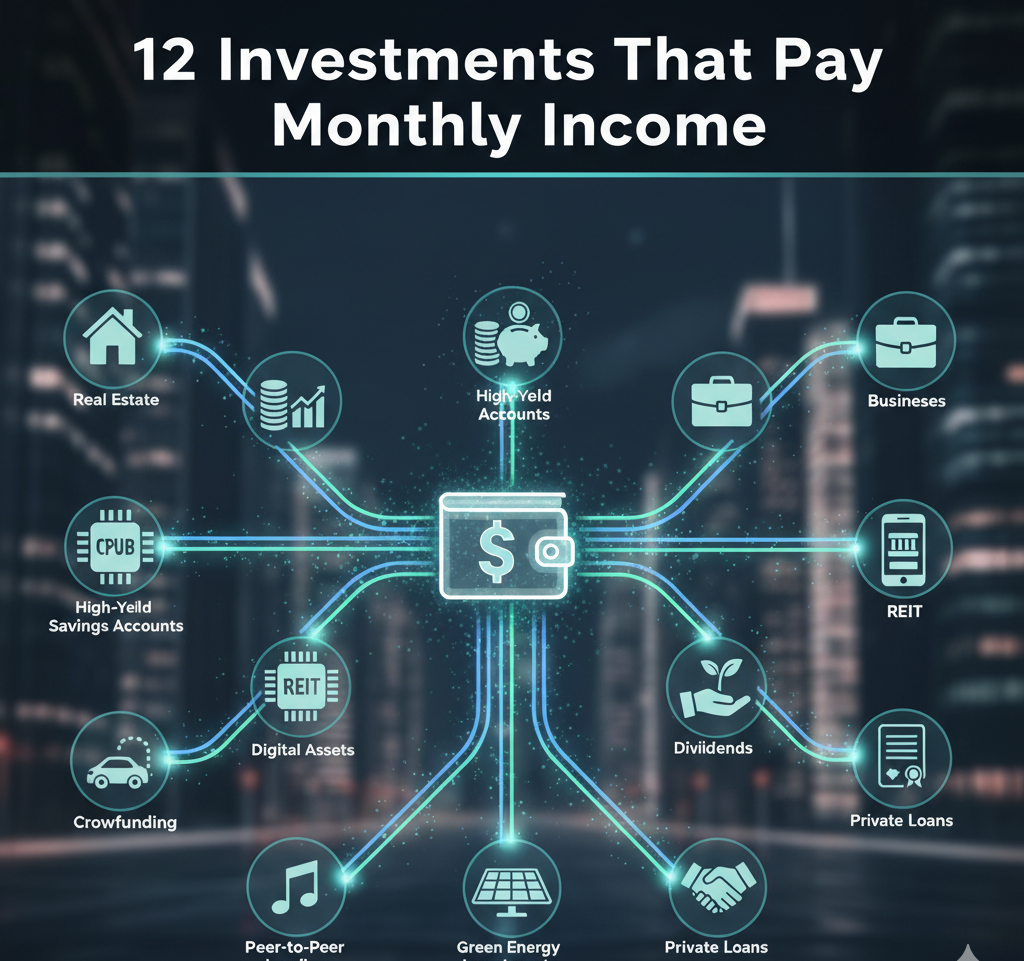
12 Investments That Pay Monthly Income
#1. Real Estate Investment Trusts That Pay Monthly Dividends
Real Estate Investment Trusts, commonly known as REITs, are often the entry point for people researching investments that pay a monthly income. A REIT is a company that owns or finances income-producing real estate and distributes most of its profits to shareholders.
What makes monthly dividend REITs especially attractive is convenience. You don’t need to buy property, manage tenants, or handle repairs. You simply buy shares and receive income. A widely known example is Realty Income, a company that has built its entire brand around paying reliable monthly dividends from commercial properties leased to major tenants.
REITs work best for investors who want real estate exposure without operational stress. The trade-off is that they are sensitive to interest rates and economic cycles. When borrowing costs rise or occupancy declines, dividends can come under pressure. Still, for many investors, the consistency outweighs the risk.
#2. Real Estate Crowdfunding Platforms
Real estate crowdfunding changed the rules of property investing. Instead of needing large capital to buy a building, investors can pool money online and earn a share of rental income from professionally managed properties.
Platforms such as Fundrise allow investors to access residential and commercial real estate projects with relatively small starting amounts. Some projects distribute income monthly, making them attractive investments that pay a monthly income without requiring hands-on involvement.
The strength of real estate crowdfunding lies in accessibility and diversification. You can spread your capital across multiple properties in different locations. The downside is liquidity. Many investments require holding periods of several years, which means your money is not easily accessible once invested.
#3. Dividend-Paying Stocks with Monthly Distributions
Most dividend-paying stocks distribute income quarterly, but a smaller group pays monthly due to predictable cash flow models. These companies are often structured to prioritize income distribution.
A notable example is Main Street Capital, which earns revenue by financing small and mid-sized businesses and distributes profits to shareholders every month. This type of investment combines income generation with potential capital appreciation.
Monthly dividend stocks are appealing because they offer flexibility. You can reinvest dividends, use them as income, or combine both strategies. The key risk is sustainability. High yields only matter if earnings consistently support them.
#4. High-Yield Savings Accounts and Cash Management Accounts
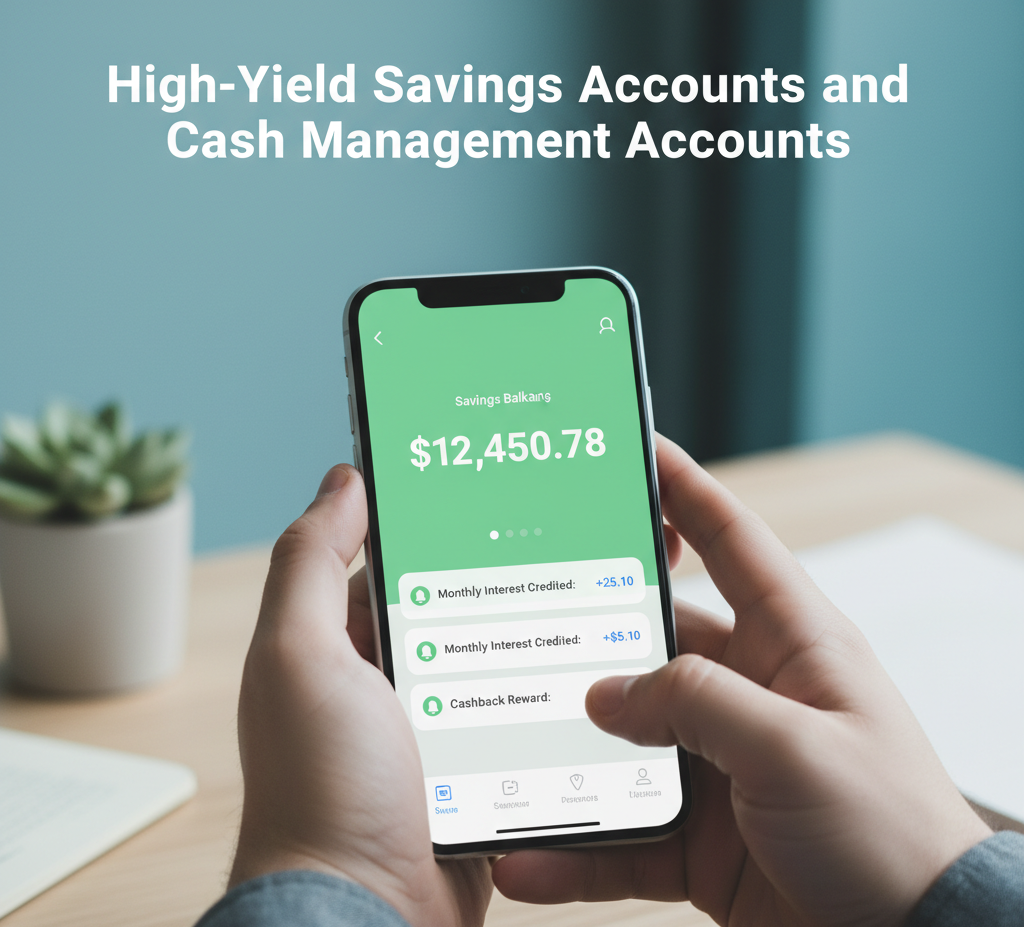
High-yield savings accounts may not feel like traditional investments, but they are among the safest investments that pay a monthly investment through interest.
Interest is calculated daily and credited monthly, providing a steady and predictable income. These accounts are ideal for emergency funds, short-term goals, or capital preservation. While returns are lower than market-based investments, the trade-off is security and liquidity.
In a broader income strategy, high-yield savings accounts act as a stabilizer. They won’t make you wealthy, but they protect capital and provide reliability when markets are volatile.
#5. Peer-to-Peer Lending Platforms
Peer-to-peer lending allows investors to earn interest directly from borrowers by funding personal or business loans. Investors receive monthly repayments consisting of both interest and principal.
Platforms like LendingClub have popularized this model by allowing investors to diversify across many loans rather than relying on a single borrower. This diversification reduces risk and smooths monthly income.
The main risk in peer-to-peer lending is default. Economic downturns can increase borrower failures, which directly impact returns. Successful investors spread capital across many loans and avoid overexposure to high-risk borrowers.
#6. Corporate and Government Bonds with Monthly Interest Funds
Bond funds and exchange-traded funds that distribute income monthly appeal to conservative investors seeking stability. Instead of holding individual bonds that pay semi-annually, these funds pool interest payments and distribute them monthly.
These investments that pay a monthly income are often used by retirees because they offer lower volatility compared to stocks. However, bond prices still fluctuate with interest rate changes, meaning rising rates can reduce fund values temporarily. Bond funds work best as part of a diversified income portfolio rather than a standalone solution.
#7. Rental Properties
Rental property remains one of the most traditional and widely understood monthly income investments. Tenants pay rent monthly, creating a predictable cash flow that can cover expenses and generate profit.
Rental properties offer two advantages: income and appreciation. Over time, rents may increase while the property value grows. However, this strategy requires capital, management, and patience. Vacancies, maintenance, and tenant issues are unavoidable realities. Rental income becomes truly passive only when management is outsourced, which reduces profits but saves time.
#8. Covered Call ETFs
Covered call ETFs generate income by selling call options on stocks they already own. The option premiums collected are often distributed monthly, making them popular investments that pay a monthly income.
Providers like Global X have made this strategy accessible to everyday investors. Covered call ETFs perform best in flat or moderately rising markets, where option premiums enhance income. The downside is capped upside. Because call options are sold, strong market rallies may limit capital appreciation.
#9. Annuities with Monthly Payout Options
Annuities are insurance-based products designed to provide a predictable income, often for retirement. With monthly payout options, they offer income certainty that few other investments can match.
These investments that pay a monthly income appeal to people who prioritize stability over growth. The main drawbacks are fees, complex contracts, and limited liquidity. Once money is committed, accessing it early can be costly. Annuities work best as a foundation for income rather than a growth vehicle.
#10. Business Income Through Silent Partnerships

Silent partnerships involve investing capital in a business while leaving operations to experienced managers. In return, investors receive a share of profits, often distributed monthly.
This strategy can generate higher returns than traditional investments, especially in businesses with strong cash flow, such as logistics, hospitality, or service companies. However, risk is significantly higher. Success depends on trust, transparency, legal agreements, and business performance. This approach suits investors who understand business risk and due diligence.
#11. Digital Assets with Staking Rewards
Some blockchain networks, like Bitcoin, Eterium, and other crypto assets, allow investors to earn staking rewards by holding and validating transactions. These rewards function like interest and may be distributed monthly.
While this represents a modern form of investments that pay a monthly investment, volatility and regulatory uncertainty make it high risk. Prices can fluctuate dramatically, and platform security is critical. Staking can enhance returns, but it should only be used with capital you can afford to lose.
ALSO READ: The Best Way to Build a Crypto Portfolio for Long-Term Growth in 2026
#12. Structured Notes and Income Funds
Structured notes and income-focused funds combine bonds, derivatives, and other instruments to generate regular payouts. These products are often marketed toward investors seeking monthly income.
The appeal lies in customization and yield potential. The risk lies in complexity. If the underlying conditions are misunderstood, losses can occur even when income appears stable. These investments require careful evaluation and are best suited for experienced investors.
How to Choose the Right Monthly Income Investments

With so many options available, selecting the right investments that pay a monthly income depends on your goals, risk tolerance, and time horizon. If you value safety and liquidity, savings accounts and high-quality bond funds may be suitable. If you are comfortable with moderate risk, REITs, dividend stocks, and covered call ETFs might offer a balance between growth and income.
For those seeking higher returns and willing to accept greater risk, peer-to-peer lending, business partnerships, and certain digital assets can provide opportunities. However, diversification is critical. Relying on a single income source increases vulnerability to market changes.
Conclusion: 12 Investments That Pay a Monthly Income in 2026
As we have covered our top 12 investments that pay a monthly income, the most effective strategy often involves combining multiple investments. For example, you might allocate funds across REITs, dividend stocks, bond funds, and a rental property. Each asset class behaves differently, which helps stabilize overall income.
Reinvesting a portion of your monthly earnings can accelerate portfolio growth. Over time, the compounding effect can significantly increase your income stream. Also, tracking performance regularly and adjusting allocations as needed ensures your investments continue to align with your financial goals.
ALSO READ: NFT Trends in 2026: Hype or Opportunity. Honest Guide
Whether you choose real estate, dividend stocks, bonds, annuities, or alternative platforms, the key is understanding how each investment works and how it fits into your broader financial plan. Monthly income investments can provide stability, reduce reliance on a single paycheck, and move you closer to financial independence.
By approaching these opportunities with careful research, realistic expectations, and a diversified mindset, you can build a portfolio of investments that not only grows over time but also supports your lifestyle every single month. If you found this post useful, we post articles like this daily on our blog.